Engineering
Everything under the glass.
A walnut board that moves its own pieces. Scroll to take it apart: the layers, the magnet that does the walking, the path planner, the smart dice and docks, and how the same board plays Manor Mystery and the card games.
01 · Five layers in 6.5 cm
Glass, display, gantry, controller, walnut.
4 mm of toughened glass sits on a 4.5 mm display. Under them a gantry carries one magnet anywhere beneath the 56 × 56 cm playfield. The controller, Wi-Fi and power supply lie on the floor of a solid walnut frame.
02 · CoreXY motion
Two motors, one carriage.
Both motors sit still in the back corners and pull two belts. Turn them the same way and the carriage moves left and right; turn them against each other and it moves front to back. One motor alone moves it on a diagonal.
02 · Speed
12 cm a second, gently.
Pieces glide at up to 12 cm/s with 0.5 m/s² ramps: slow enough that a brass piece never slips off its magnet, quick enough to cross the playfield in under five seconds.
03 · The magnet
A hidden magnet does the walking.
Each piece has an N52 magnet, 12 × 3 mm, in its base. Under the glass a 20 × 5 mm N52 magnet rides the carriage on a servo. Lowered 20 mm it lets go; raised, it grips the piece through 8.5 mm of glass and display.
03 · The forces
Sideways pull 2–3 N. Friction 0.5–1.2 N.
The magnets press the piece down with 5–8 N. When the carriage moves, the sideways pull beats the friction of the PTFE glide pad (μ 0.10–0.15) with room to spare. The piece itself weighs 0.25 N; the magnet does all the work.
04 · Path planning
The shortest way around.
Before anything moves, the board searches a 2.5 mm grid of the track for a route that keeps every piece and house clear, like a satnav for brass. Here the first search finds no way through.
04 · Path planning
If the way is shut, a piece steps aside.
The board moves one piece out of the square, searches again, takes the shortest clear path, and puts the piece back exactly where it was.
05 · Houses and hotels
The bank delivers.
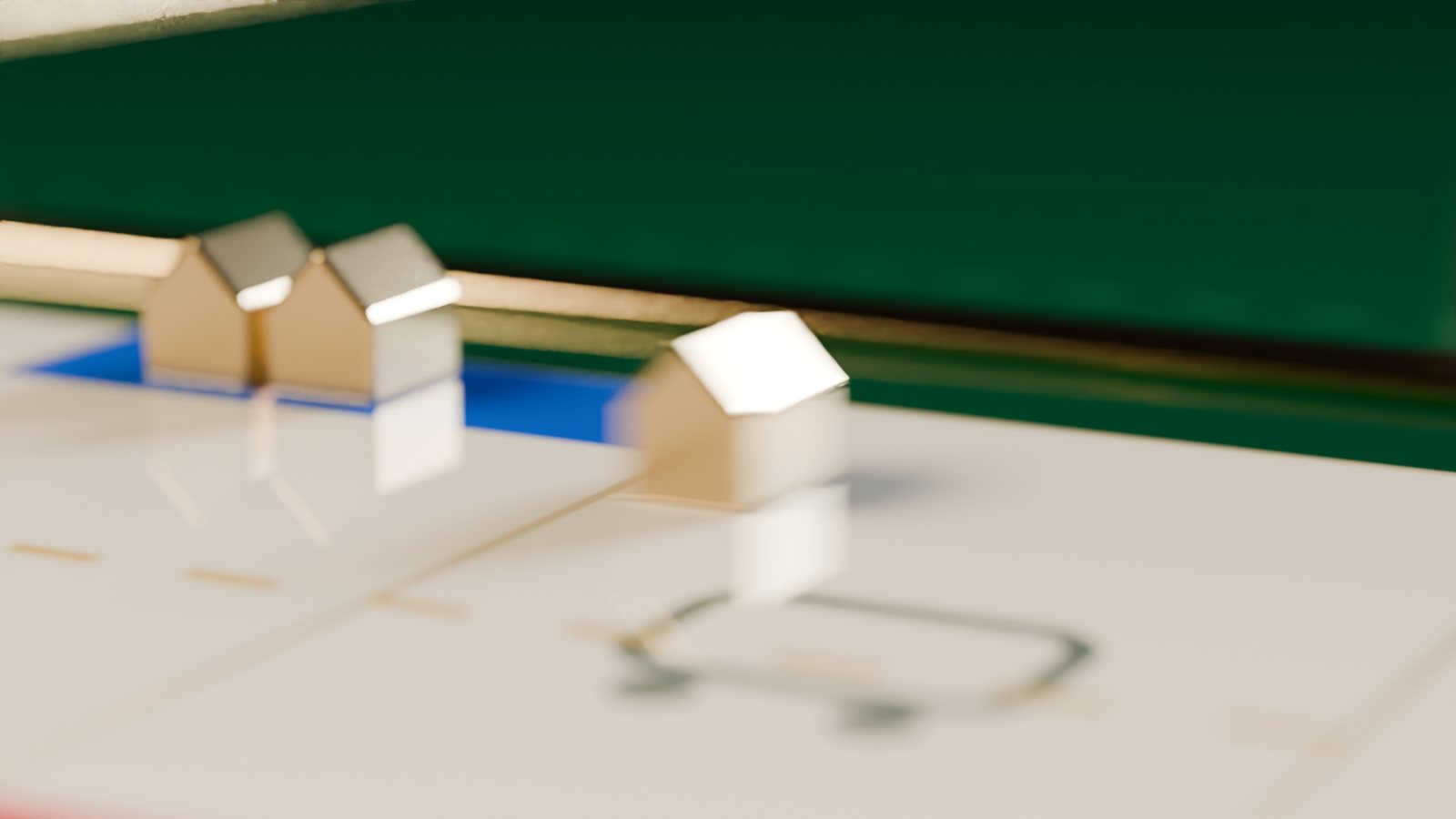
24 houses (9 × 9 × 8 mm, 4 g) and 6 hotels (20 × 9 × 10 mm, 9 g) wait in a bank in the corner. Buy three and the carriage sets them on your street, one at a time.
06 · Smart dice
Roll real dice. The board reads them.
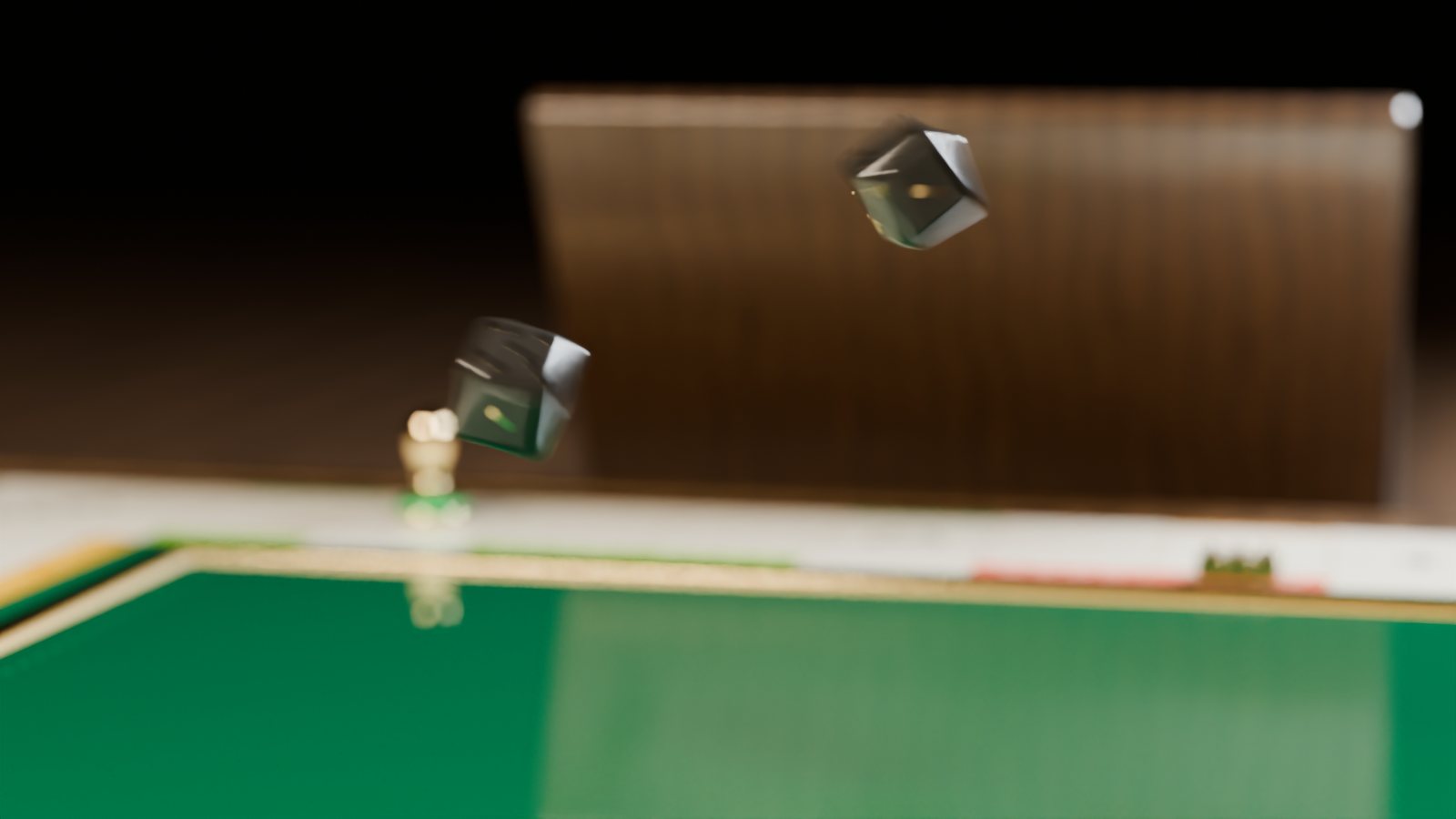
Each die knows which face is up and sends it to the board over Bluetooth. You roll them like ordinary dice, and nobody types a number.
06 · Inside a die
A sensor, a radio, a battery, a coil.
A 6-axis motion sensor finds the face that points up once the die stops. A Bluetooth Low Energy radio reports it. A small battery runs it, and a coil charges it without wires in the Vault.
07 · Docks
Set a screen down and it charges.
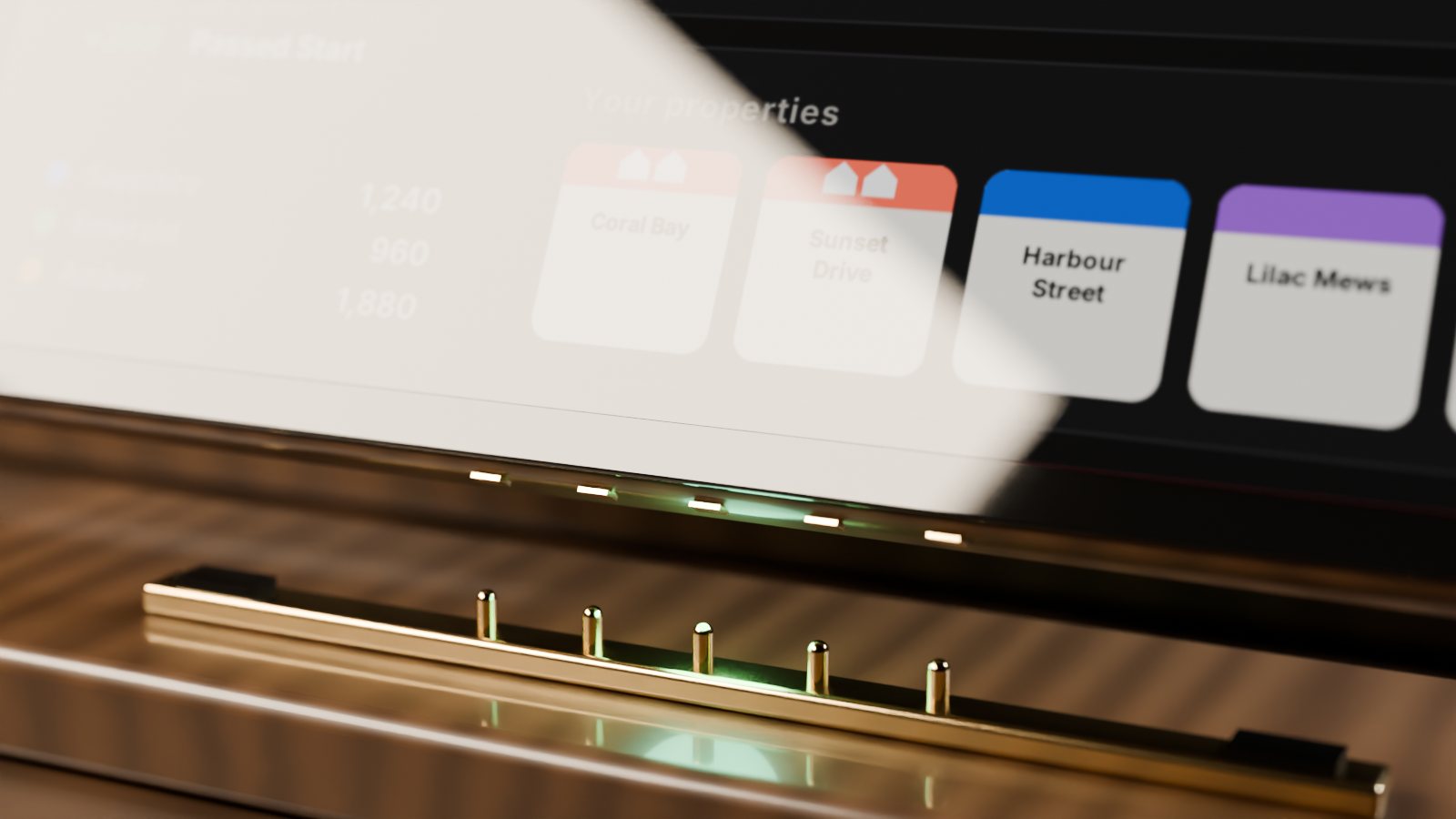
Players can use their phones as private screens, or add the Screen Set: six 8-inch screens that lean back at 62° in walnut docks. Spring-loaded pogo pins meet contacts on each screen's edge, so there is no cable to plug in.
07 · Power
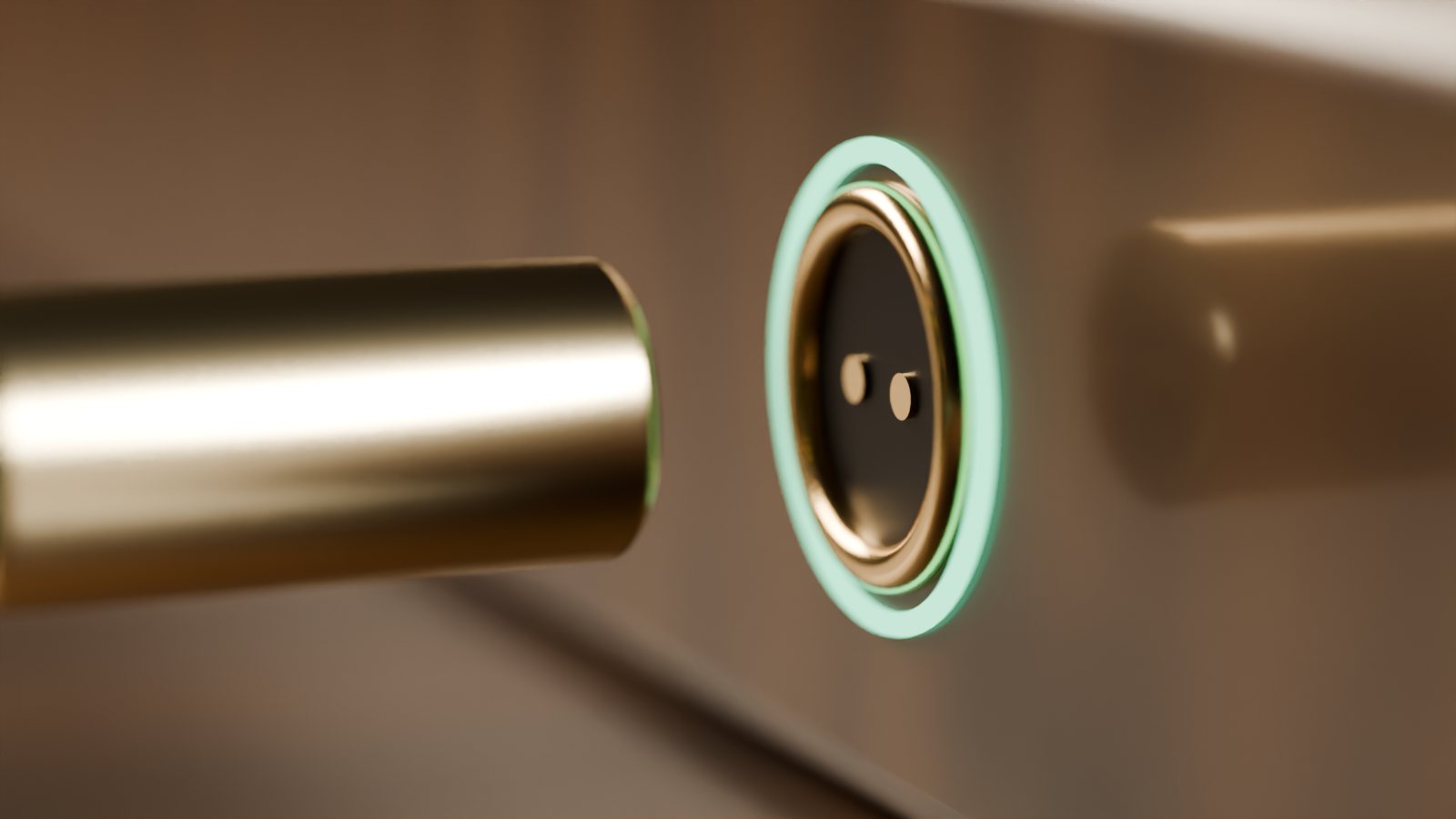
One magnetic plug for everything.
A single magnetic connector at the back powers the gantry, the display, the controller and the screen docks. Catch the cable with your foot and it lets go instead of pulling the board off the table.
08 · Manor Mystery
A secret nobody at the table can see.
The Evidence Vault holds three drums: suspects, weapons and rooms. Stepper motors turn each one to the hidden answer at the start of the game, like the reels of a slot machine.
08 · The Vault
It opens only for the right accusation.
An optical sensor finds each drum's home position, so the board always knows what is showing. A solenoid latch keeps the brass case shut until someone names the right suspect, weapon and room.
09 · Card Club
Cards are light. Chips are real.
Poker, blackjack and baccarat play on the same board. The display draws the felt and deals the cards, so there is no shuffler and no card reader to build. Your hidden cards appear only on your own screen.
09 · Chips
A steel core in every chip.
Each chip hides a thin steel disc, so the carriage that walks the brass pieces pushes a whole stack. At 0.5 m/s² friction carries the upper chips along; they would only slip above about 3 m/s².
10 · Online
Two boards, two cities, one game.
When your friend rolls in London, their piece moves on your board in Istanbul, and yours moves on theirs. Every board is a connected device, so any of the games can be played between two homes.
The numbers
One board, every game.
- Playfield
- 56 × 56 cm
- Frame
- Solid walnut, 64 cm, 6.5 cm tall
- Squares
- 4.5 cm; corners 7.75 cm
- Surface
- 4 mm toughened anti-glare glass over a 4.5 mm display
- Motion
- CoreXY, two motors; 12 cm/s, 0.5 m/s² ramps
- Magnets
- N52: 12 × 3 mm in each piece, 20 × 5 mm on a 20 mm servo lift
- Forces
- Pull 5–8 N · sideways 2–3 N · friction 0.5–1.2 N · weight 0.25 N
- Glide
- PTFE pad under every piece, μ 0.10–0.15
Your browser couldn't start the 3D film, so here are stills from it.